


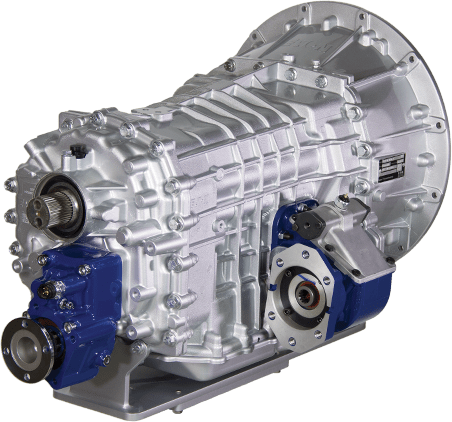
Power Take-Off (PTO) Solutions
A Power Take-Off (PTO) is a mechanical system that transfers power from the vehicle's transmission to external components, such as hydraulic pumps or compressors, enabling the effective operation of auxiliary equipment.
Key PTO Parameters
PTOs are characterized by several critical factors: torque, gear ratio, rotation direction, mounting position, and the type of output used to connect to the pump. Understanding these parameters ensures optimal performance.

Choosing the Right PTO for Your Needs
Transmission Type
To select the appropriate PTO, it is essential to first identify the type of transmission installed in your vehicle. Typically, an aluminum plate on the transmission provides vital details needed for selection. These details help ensure compatibility and efficient operation.
Key parameters to consider include:
- Gearbox manufacturer and brand
- Transmission type
- First gear ratio (if available)
Mounting Position
The mounting position defines how the PTO connects to the transmission. If multiple mounting options are available, opt for the one with the smallest dimensions to simplify installation. In cases where several PTO inputs can be utilized simultaneously, it's crucial to evaluate the total power generated by the transmission. For complex configurations, we recommend consulting with our technical experts.
Rotation
The direction of rotation is crucial when choosing a PTO-compatible pump or device, as the rotation must align with the PTO’s output.
Note: Rotation is determined when facing the PTO output, meaning the pump’s rotation will be opposite to that of the PTO.
Gear Alignment
Proper alignment of the gear is critical to ensure the PTO functions correctly. This alignment is checked against the centerline of the PTO output relative to the vehicle’s motion. Gear position is assessed from the front while facing the PTO output.
Rotation Speed
All rotation speeds listed in our catalog are based on a reference engine speed of 1000 RPM. Some transmissions feature multiple speed settings controlled by a gear shift lever. To find the precise rotation speeds for specific PTO models, consult the relevant section of our product catalog.
Output Torque and Power Calculations
To calculate the power requirements for your equipment, use the following formulas:
Power (kW): kW= (T×RPM)/9550
Torque (Nm): T= (kW×9550)/RPM
For pump input power, the formula is: kW= (P(bar)×Q(l/min))/600
Example: Calculating PTO Speed
The PTO speed is expressed as a percentage of engine speed. For instance, with a pump speed of 1000 RPM and an engine speed of 1500 RPM, the PTO would rotate at approximately 67% of engine speed.
Formula: Pump Speed÷Engine Speed= PTO Speed
1000÷1500 = 0.666 (67%)
Intermittent Torque Requirements for Components
The formula for determining the intermittent torque of drive components is:
T= (kW×9550)/RPM
The maximum torque output of the PTO is determined by its structural characteristics. During selection, ensure that the system's torque capacity aligns with your transmission’s capabilities. Torque values are given in Nm and represent the maximum permissible output for each configuration.
Important: Always verify that the absorbed torque remains below the transmission’s maximum allowable limit to avoid damage or operational issues.
By following these guidelines, Partzello Hydraulic and Automotive ensures you select the most efficient and reliable PTO for your application, enhancing the performance and durability of your equipment.
